


Where to Put Puppy Pads in Your Home for Best Results

Welcoming a new puppy into your home can be a joyful experience, but it also comes with its challenges, especially when it comes to potty training.
For many puppy owners, particularly those living in apartments or with mobility issues, using training pads is a practical solution. However, the key to successful potty training lies in the strategic placement of these pads.
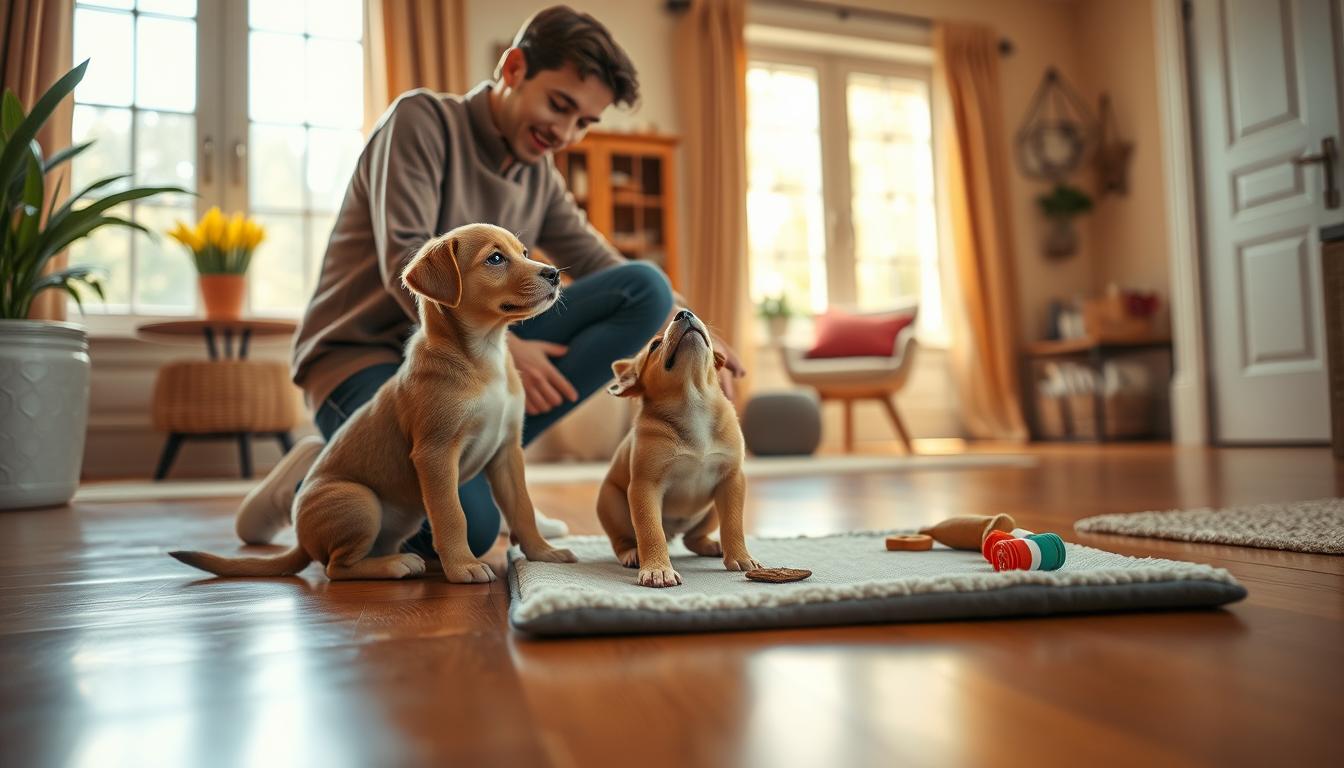
Using the right training methods and products, such as Bulldogology puppy pads, can make a significant difference. But, the question remains: how can you optimize the placement of these pads for the best results?
Key Takeaways
- Understand the importance of strategic pad placement for successful potty training.
- Learn how to choose the best locations for puppy pads based on your home layout.
- Discover how proper placement can reduce accidents and speed up the training process.
- Explore the benefits of using Bulldogology puppy pads for potty training.
- Get practical advice for different living situations, from apartments to large homes.
Understanding Puppy Pad Training Basics
Understanding the basics of puppy pad training is essential for a stress-free potty training experience. Puppy pad training serves as an essential intermediate step for many dog owners, especially those in apartments or with limited outdoor access. It provides a consistent, recognizable bathroom spot for your puppy, helping them understand where it’s appropriate to eliminate and where it’s not.
Why Use Puppy Pads for Potty Training
Puppy pads are extra absorbent, moisture-locking, and odor-wicking, making them an effective solution for potty training. They protect your floors from accidents and messes, providing a hygienic and convenient way to train your puppy. By using puppy pads, you can significantly reduce the stress of potty training for both you and your puppy.
For more detailed information on using puppy pads for house training, you can visit Bulldogology’s guide on puppy pad training.
Bulldogology Puppy Pads: Features and Benefits
Bulldogology puppy pads offer superior absorption, leak-proof backing, and odor control technology, making them particularly effective for training purposes. These features help in keeping your home clean and odor-free while your puppy learns to use the pads consistently. The use of Bulldogology puppy pads can enhance the potty training process, providing a reliable and efficient solution for puppy owners.
When Puppy Pads Are the Right Choice
Certain living situations make puppy pads an indispensable tool for potty training. For instance, if you’re an apartment dweller or have limited access to outdoor areas, puppy pads can be a lifesaver. They provide a convenient and hygienic solution for your puppy’s potty needs.
Apartment Living Situations
Puppy pads become essential for those living in high-rise apartments where going outside requires significant time and effort. They allow you to maintain a consistent potty training routine despite the challenges of apartment living.
Young Puppies with Limited Bladder Control
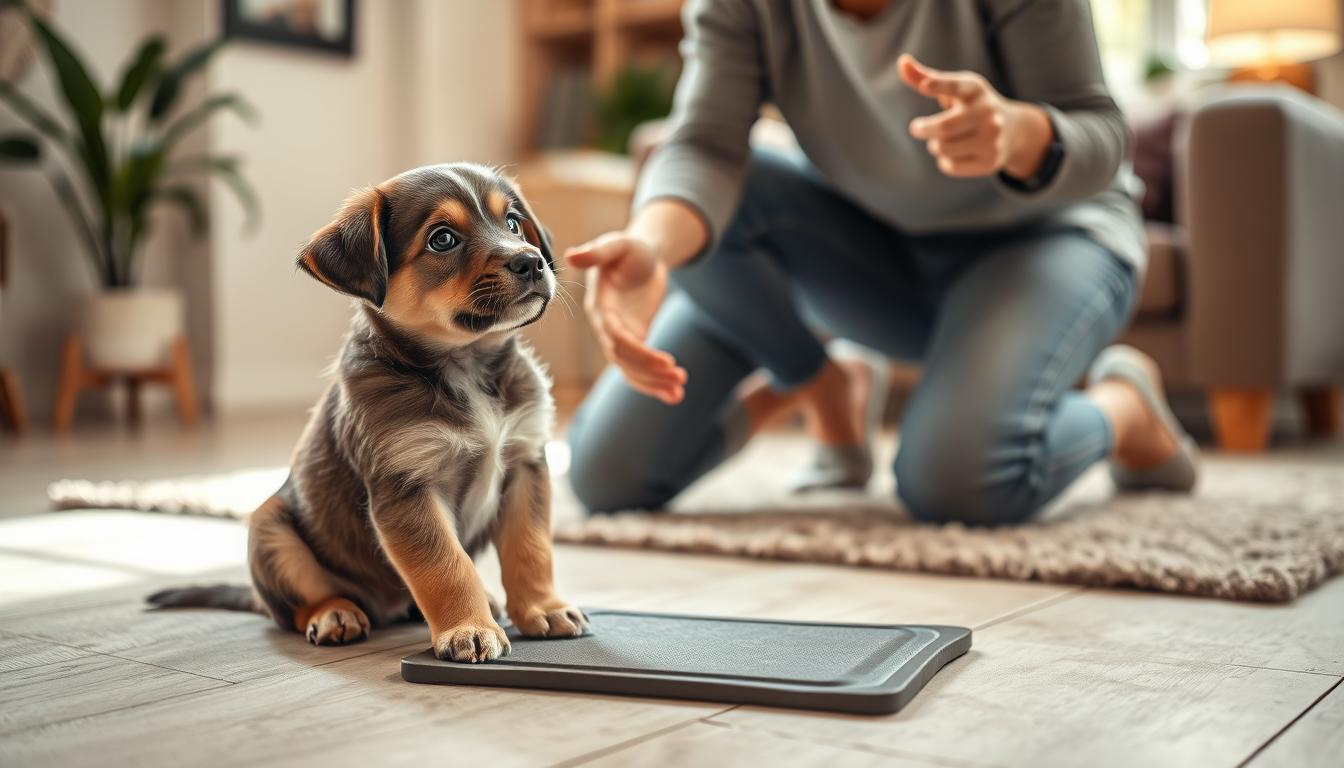
Young puppies physically cannot hold their bladder for extended periods. The general rule is that puppies can hold their bladder for approximately one hour per month of age, plus one additional hour. For example, a two-month-old puppy can typically hold their bladder for about three hours.
Unvaccinated Puppies and Health Concerns
For puppies under 16 weeks who haven’t completed their vaccination series, using puppy pads helps protect them from potential disease exposure in public areas. This is especially important for maintaining your puppy’s health and safety during the critical early stages of their life.
By understanding when puppy pads are the right choice, you can make informed decisions about your pup’s training plan. This knowledge helps you navigate the challenges of potty training with confidence.
Strategic Locations: Where to Put Puppy Pads in Your Home
The strategic placement of puppy pads in your home can make a significant difference in your puppy’s potty training journey. By choosing the right locations, you can create a smooth transition from indoor to outdoor potty training and help your puppy develop good habits.
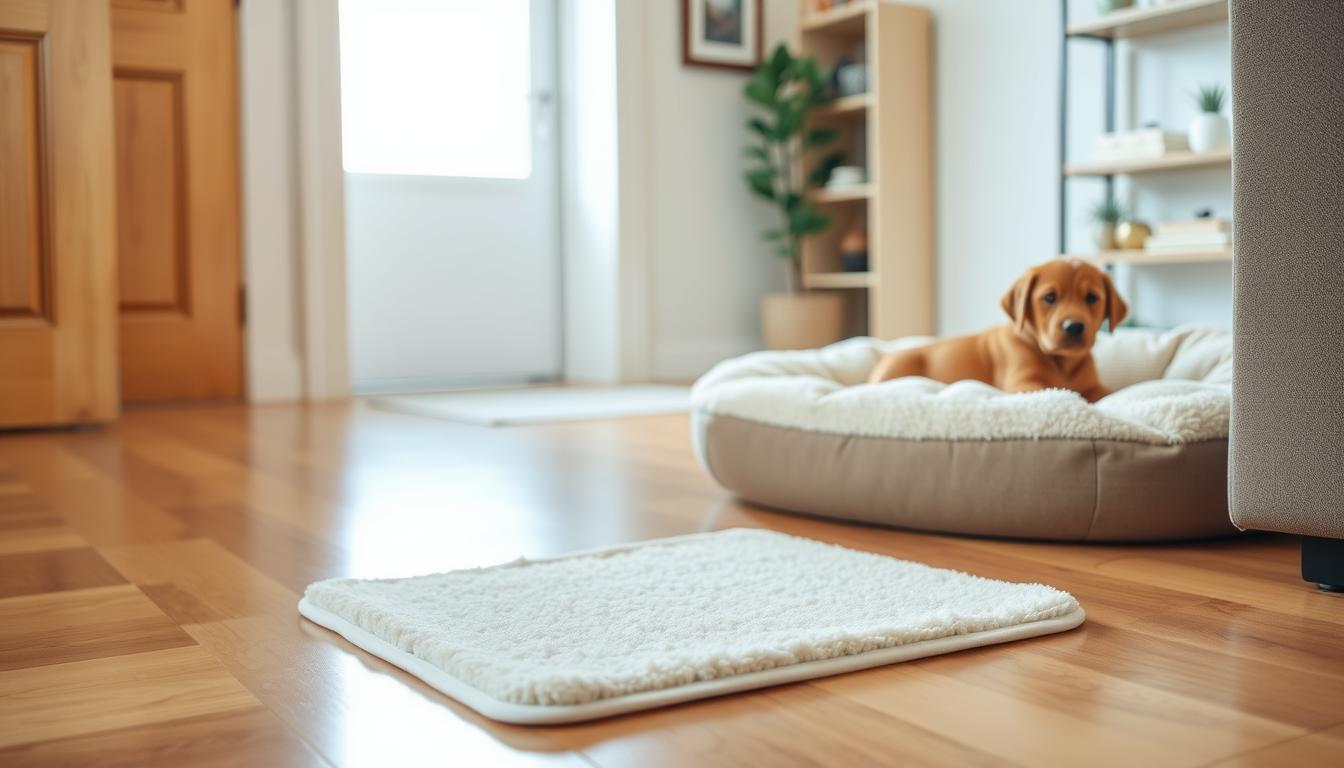
Near the Door Leading Outside
One of the most effective locations for puppy pads is near the door your puppy will eventually use to go outside. This creates a natural transition path from indoor to outdoor potty training, making it easier for your puppy to understand where they should go potty. By placing the pad near the door, you’re helping your puppy associate the door with the act of going outside, which will be beneficial when you start taking them out.
Designated Bathroom Areas
Designating a specific bathroom area that’s somewhat separated from high-traffic zones provides your puppy with privacy while eliminating. This area should still be accessible and preferably have a non-slippery floor to prevent accidents. By giving your puppy their own “bathroom,” you’re reinforcing good potty habits and making cleanup easier.
Away from Feeding and Sleeping Areas
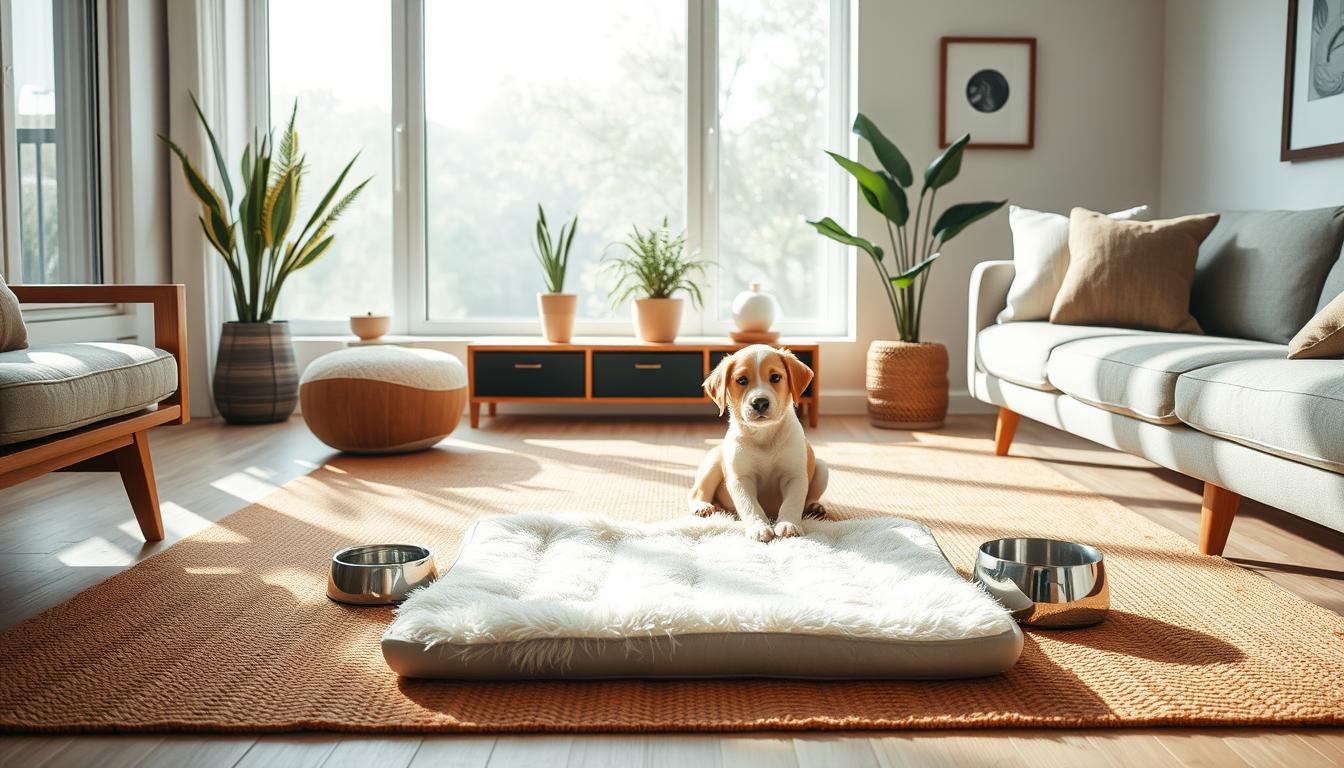
Always place puppy pads away from your puppy’s feeding and sleeping areas. Dogs naturally avoid eliminating where they eat or rest, so separating these areas reinforces proper potty habits. This separation is crucial in the early stages of potty training, as it helps your puppy understand that their potty area is distinct from their living space.
Easily Accessible Locations
Ensure that the puppy pad is in an easily accessible location for your puppy. This is particularly important for young puppies or those with mobility issues. Easy access encourages your puppy to use the pad correctly and reduces the likelihood of accidents.
Multiple Pad Locations for Larger Homes
For multi-level homes or larger spaces, consider placing pads on each floor or in strategic locations where your puppy spends significant time. This ensures that your puppy always has quick access to an appropriate elimination spot, especially during the early training stages.
| Location Considerations | Benefits | Precautions |
|---|---|---|
| Near the door leading outside | Creates a natural transition path to outdoor potty training | Ensure the area is clear of drafts or distractions |
| Designated bathroom area | Provides privacy and reinforces good potty habits | Avoid high-traffic zones and keep the area clean |
| Away from feeding and sleeping areas | Reinforces proper potty habits by separating areas | Ensure the puppy pad is still easily accessible |
By considering these strategic locations and tips, you can create an effective potty training plan that works for both you and your puppy. Remember, the key is to be consistent and patient, as potty training can take time.
Setting Up an Effective Puppy Pad Area
The key to successful puppy pad training lies in creating a well-organized and accessible toilet area. This involves more than just placing a pad on the floor; it requires a thoughtful approach to create a defined space that your puppy can easily use and understand.
Creating a Defined Space with Borders
Defining the puppy pad area with clear boundaries helps your puppy understand where it’s acceptable to go potty. You can achieve this by using a pen or low barriers around the pad to create a contained space. Using visual and physical boundaries not only helps your puppy learn faster but also prevents accidents by limiting the area where your puppy can move around during the training process.
In the beginning, you may need to cover a wider area with 3-4 potty pads until your puppy learns to target the pad more precisely. Alternatively, enclosing the potty pad area with a pen can help keep your puppy in the designated area and teach them to use the pads effectively.
Using Holders and Trays for Stability
Puppy pad holders or trays are essential for keeping the pads in place, especially for energetic puppies who might accidentally disturb the pad during use. These holders prevent the pads from sliding, bunching, or flipping, ensuring that your puppy has a stable surface to use. This stability is crucial for building your puppy’s confidence in using the pad.
Proper Spacing and Coverage
When setting up multiple pad areas, it’s crucial to consider the spacing between them. If the pads are too close, your puppy might get confused between the different locations. On the other hand, if they’re too far apart, your puppy might not be able to reach them in time. Strategic placement ensures that your puppy can easily access the pads when needed.
- For young puppies or those still learning, overlapping multiple pads can create a larger target area that can be gradually reduced as your puppy’s accuracy improves.
- Consider using waterproof mats under and around the pads to protect your flooring from accidents.
- The ideal setup balances accessibility with containment, making it easy for your puppy to enter the area while keeping the mess confined.
Establishing a Consistent Potty Training Schedule
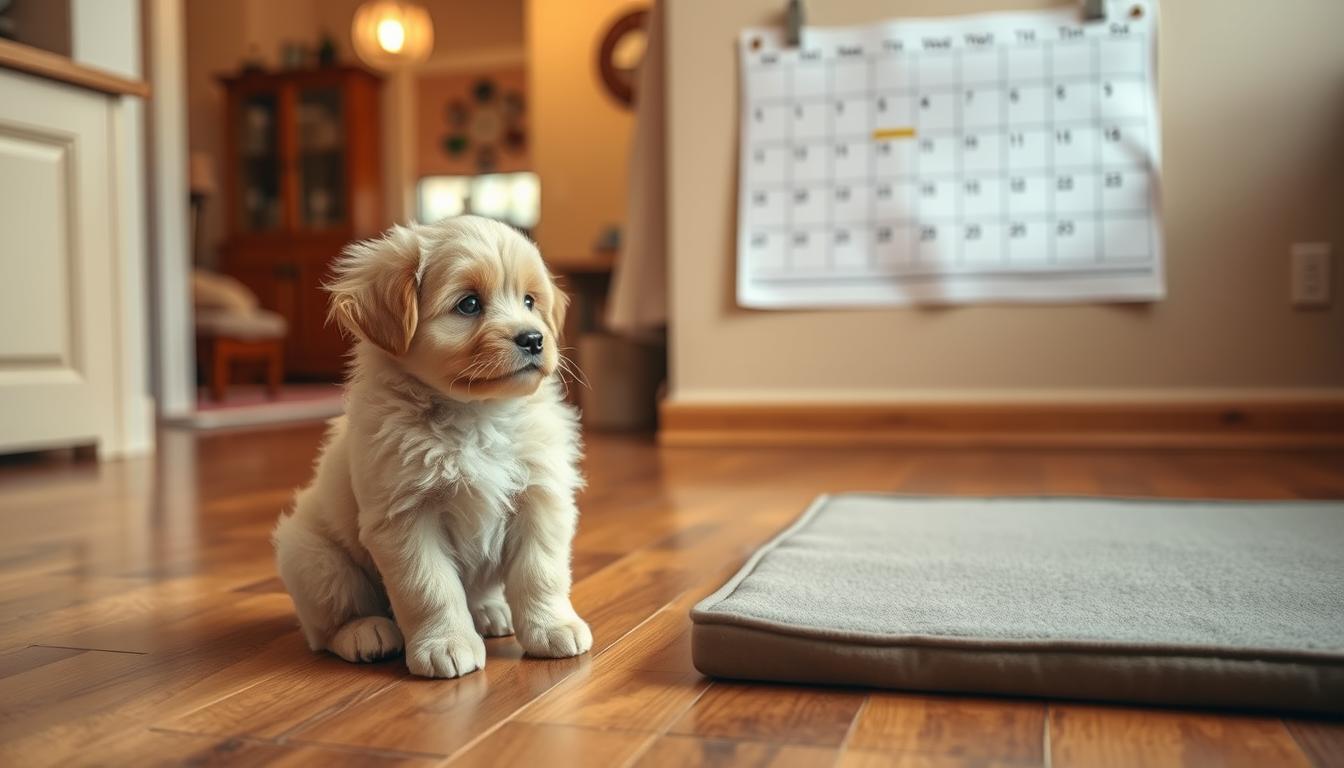
A consistent potty schedule is key to teaching your puppy good bathroom habits. By creating a routine, you’re helping your puppy understand when it’s time to go to the bathroom, which is crucial for successful puppy pad training. This routine not only aids in housebreaking but also helps in developing your puppy’s bladder control.
To establish an effective schedule, you need to consider your puppy’s age, as it directly influences how frequently they need potty breaks. Younger puppies, typically those between 8-10 weeks old, require breaks every 1-2 hours while they’re awake. As your puppy matures, you can gradually extend the time between these breaks.
Age-Appropriate Potty Break Timing
Understanding that your puppy’s age determines their bladder control is vital. A general rule of thumb is that a puppy can hold their bladder for as long as their age in months plus one hour. For instance, a three-month-old puppy can typically hold their bladder for about four hours. This guideline helps you plan potty training sessions that are appropriate for your puppy’s developmental stage.
For example, if you have an 8-week-old puppy, they would need a potty break approximately every hour or so when they’re awake. As they grow older, the duration between potty breaks can be extended. It’s also helpful to keep a record of your puppy’s successful potty times to identify patterns and refine your schedule accordingly.
Post-Activity Potty Breaks
Scheduling potty breaks after specific activities is another effective strategy. Puppies usually need to eliminate after waking up, eating, drinking, playing, and napping. By taking your puppy to the potty pad after these activities, you’re capitalizing on their natural elimination patterns and preventing accidents. Consistent meal timing also helps create predictable potty timing, making it easier to anticipate when your puppy will need to go.
Overnight Considerations
Overnight potty breaks require special consideration, especially for young puppies. Very young puppies may need one or two nighttime breaks, which can be gradually eliminated as their bladder control improves. It’s essential to be patient and adjust your schedule as your puppy grows and develops better control. For more information on transitioning from puppy pads to outdoor potty training, you can visit Bulldogology’s guide on the transition process.
By balancing consistency with flexibility, you can create a potty training schedule that meets your puppy’s needs and adapts to their growth. The ultimate goal is not just to prevent accidents but to teach your puppy to hold it for gradually increasing periods, laying the groundwork for successful outdoor training in the future.
Teaching Your Puppy to Use the Pads
The key to a stress-free potty training experience lies in teaching your puppy to use the pads. This process involves several steps, from introducing your puppy to the pad location to handling any resistance or confusion they might exhibit.
Introducing Your Puppy to the Pad Location
Begin by physically placing your puppy on the pad during times when they are likely to eliminate, such as after sleeping, eating, or playing. This helps create an association between the pad and the act of relieving themselves.
At The Puppy Academy, this method is highly recommended for its effectiveness in establishing good potty habits from the start.
Using Verbal Cues and Commands
Using consistent verbal cues like “go potty” or “do your business” while your puppy is on the pad helps create a command association. This will eventually allow you to prompt elimination on command, making the training process smoother.
Positive Reinforcement Techniques
Immediate praise and rewards are crucial when your puppy successfully uses the pad. Celebrate within seconds of completion to ensure your puppy connects the reward with the correct behavior. You can even throw a “potty party” by giving them a special treat as a reward!
Much of creating positive associations in puppy training comes with rewards and praise.
Handling Resistance or Confusion
When your puppy shows resistance or confusion about using the pad, avoid punishment, which can create negative associations. Instead, increase supervision and return to the basics of pad training. For puppies who miss the pad, collect a small sample of the accident with the pad to transfer the scent, helping them recognize the pad as the appropriate elimination spot.
| Training Tip | Description | Benefit |
|---|---|---|
| Consistent Verbal Cues | Use specific commands like “go potty” | Creates command association for easier training |
| Positive Reinforcement | Praise and reward successful pad use | Encourages good potty habits |
| Leash Guidance | Use a leash to keep your puppy on the pad | Prevents wandering during potty time |
Consistency is key in puppy pad training. Always respond the same way to successful pad use and accidents to avoid confusing your puppy.
Monitoring and Supervision Strategies
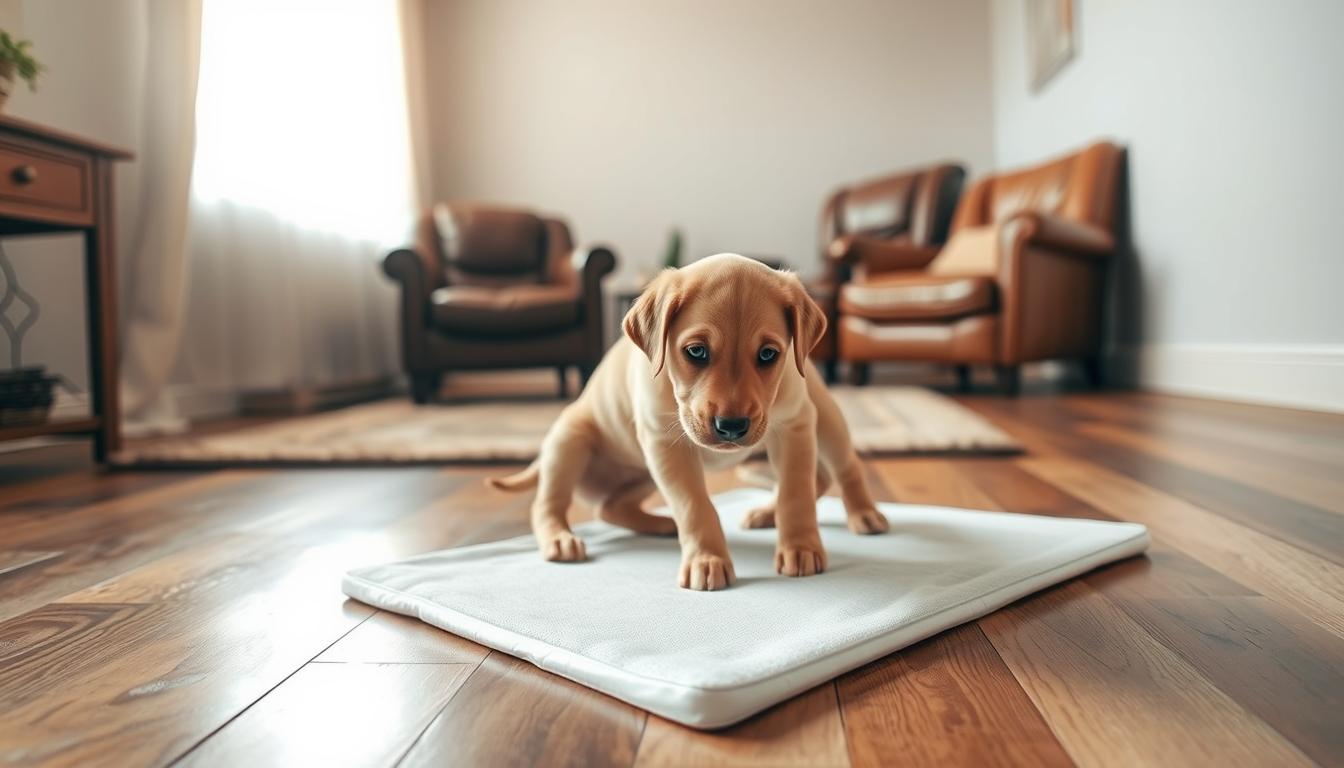
Effective puppy pad training requires a combination of patience, consistency, and close supervision. By keeping a watchful eye on your puppy, you can identify the signs that indicate they need to go to the potty pad, thus preventing accidents and reinforcing good habits.
Signs Your Puppy Needs to Go
Watch your puppy for telltale signs they have to go, such as sniffing the ground, circling, or whining. When you see these signs, take them straight to the potty pad. Common pre-potty behaviors include circling, sniffing the floor intently, whining, pacing, or heading to a previous accident spot. Learning your pup’s specific signals is crucial for successful puppy training.
Using Leash Guidance During Training
Using a leash during the supervision phase keeps your puppy within sight and allows for immediate guidance to the potty pad when potty signs appear. Clip the leash to your waist to limit your puppy’s movements and prevent them from sneaking off to have accidents in hidden areas. This “umbilical cord method” provides constant supervision during active times.
If your puppy shows signs but doesn’t use the pad when taken there, don’t allow free play afterward. Instead, return them to their confined area and try again in 10-15 minutes. Consistent monitoring not only prevents accidents but also helps you identify patterns in your puppy’s elimination schedule, allowing you to proactively take them to the pad.
- Vigilant supervision is crucial for recognizing the subtle signs that your puppy needs to eliminate before an accident occurs.
- Using a leash during supervision keeps your puppy within sight and allows for immediate guidance to the potty pad.
- Consistent monitoring helps identify patterns in your puppy’s elimination schedule.
Integrating Crate Training with Puppy Pad Use
The synergy between crate training and puppy pad training can accelerate your puppy’s learning process. By leveraging your puppy’s natural instinct to keep their sleeping area clean, crate training complements puppy pad use effectively. This combination is particularly useful for developing good potty habits and preventing accidents.
Proper Crate Setup and Size
Choosing the right crate size is crucial for successful crate training. The crate should be large enough for your puppy to stand up, turn around, and lie down comfortably, but not so large that they can use one end as a toilet area. A properly sized crate helps in developing bladder control and reduces the likelihood of accidents.
When setting up the crate, ensure it’s in a quiet, comfortable location where your puppy can relax. Adding comfortable bedding and a few toys can make the crate a welcoming space for your puppy.
Crate-to-Pad Transition Routine
Establishing a consistent routine for transitioning your puppy from the crate to the puppy pad is vital. Immediately after letting your puppy out of the crate, take them to the designated pad area. This predictability helps your puppy learn to associate the crate exit with the need to use the pad.
A consistent crate-to-pad routine not only aids in potty training but also helps in creating a sense of security and predictability for your puppy.
Creating Positive Crate Associations
To make crate training effective, it’s essential to create positive associations with the crate. You can achieve this by placing treats, meals, and comfortable bedding inside the crate. This approach ensures that your puppy views the crate as a safe and welcoming space rather than a punishment.
| Crate Training Benefits | Description |
|---|---|
| Reduces Accidents | Helps prevent accidents by giving your puppy a designated area to hold their bladder until they can go to the pad. |
| Develops Bladder Control | Aids in developing your puppy’s bladder control by limiting the space where they can relieve themselves. |
| Creates Predictability | Establishes a routine that your puppy can follow, making it easier for them to learn when it’s time to go to the pad. |
By integrating crate training with puppy pad use, you can create a comprehensive potty training system that is both effective and efficient. This approach not only speeds up the potty training process but also helps in developing good habits and reducing the risk of accidents.
Troubleshooting Common Puppy Pad Problems
As you navigate the challenges of potty training, you’ll likely encounter some common puppy pad problems. Effective troubleshooting is key to overcoming these issues and ensuring successful potty training.
Addressing Puppy Missed Pads
One of the most common issues is puppies missing the pad. To improve targeting accuracy, consider using pad holders or placing pads in corners where your puppy is less likely to miss. Temporarily using larger or multiple overlapping pads can also help.
For instance, a puppy might consistently miss the pad by a few inches. Using a pad holder can help keep the pad in place, reducing the likelihood of edge misses.
Preventing Pad Shredding and Playing
Some puppies may shred or play with their pads, undermining the training process and creating health risks if ingested. To prevent this, supervise pad time closely and provide your puppy with appropriate toys to keep them occupied. Consider using pad holders that secure the edges to prevent shredding.
Overcoming Refusal to Use the Pad
If your puppy suddenly refuses to use the pad, it’s essential to identify the cause. A change in pad brand, a startling noise, or even a cleaning product smell could be the culprit. Try to revert to a previous pad brand or location if you suspect a negative association.
Managing Inconsistent Use Patterns
Inconsistent use patterns can be frustrating. Ensure that everyone in the household follows the same routine and uses the same commands to avoid confusing your puppy. If your puppy uses the pad sometimes but not others, tracking successful times versus accidents can help reveal patterns and adjust your approach.
| Issue | Solution | Tips |
|---|---|---|
| Puppy missing the pad | Use pad holders or place pads in corners | Temporarily use larger or multiple pads |
| Pad shredding or playing | Supervise pad time and provide toys | Use pad holders that secure edges |
| Refusing to use the pad | Identify and address negative associations | Revert to previous pad brand or location |
| Inconsistent use patterns | Ensure consistent household routine | Track successful times versus accidents |
By understanding and addressing these common puppy pad problems, you can refine your potty training approach and help your puppy learn more effectively.
Transitioning from Pads to Outdoor Potty Training
Successfully transitioning your puppy from pads to outdoor potty training requires patience, consistency, and a well-planned approach. As your puppy grows and becomes more accustomed to using potty pads, it’s essential to start thinking about making the transition to outdoor elimination.
The key to a smooth transition is gradual change. Gradually relocating the potty pad is an effective technique to help your puppy adjust to the new outdoor potty area. Start by moving the pad closer to the door leading outside, then gradually move it outside over several days.
Gradual Pad Relocation Techniques
Begin by placing the potty pad near the door that leads outside. Each day, move it a little further towards the outside until you finally place it in the desired outdoor location. This method helps your puppy get used to the new environment without feeling confused or resistant to the change.
Consistency is crucial during this transition phase. Maintaining consistent verbal cues, such as “go potty” or “hurry up,” helps your puppy understand that the expected behavior remains the same despite the change in location.
Maintaining Consistent Cues During Transition
Use the same commands and rewards you used during the indoor potty training. This consistency will help your puppy associate the cues with the action of eliminating, regardless of the location. Be sure to reward your puppy with praise and treats when they successfully use the outdoor potty area.
| Transition Phase | Action | Tips |
|---|---|---|
| Phase 1 | Move pad to door | Keep an eye on your puppy’s adjustment |
| Phase 2 | Move pad outside | Gradually increase outdoor time |
| Phase 3 | Final outdoor location | Maintain consistent cues and rewards |
Timeline Expectations for Full Transition
Most puppies require 2-4 weeks to fully transition from potty pads to outdoor elimination. However, this timeline can vary depending on the puppy’s age, breed, and previous training. Be prepared for occasional accidents during this period as your puppy learns to recognize outdoor-specific elimination cues.
By following these steps and maintaining a consistent approach, you can help your puppy successfully transition to outdoor potty training. Remember to be patient and celebrate small successes along the way.
Cleaning and Maintenance Best Practices
Maintaining a clean and hygienic environment is crucial for successful puppy pad training. A clean area not only prevents repeat accidents but also ensures your dog’s health and well-being.
Proper Accident Cleanup
When accidents happen, it’s essential to clean the area thoroughly to prevent your dog from being attracted to the same spot again. Use an enzymatic cleaner specifically designed for pet accidents to break down the organic compounds in urine and feces.
- Use a cleaner that destroys odors to prevent repeat accidents.
- Clean the area thoroughly, ensuring no residue remains.
Pad Changing Frequency
Regularly changing your puppy pads is vital for maintaining hygiene and preventing your puppy from avoiding a soiled pad. Change pads after 1-2 uses or at least once daily.
- Change pads frequently, especially in households with multiple dogs or young puppies.
- Create a cleaning station near the pad area for convenience.
Conclusion: Setting Your Puppy Up for Potty Training Success
By combining the right puppy pads with a consistent training schedule, you’ll be setting your puppy up for success. Successful potty training is a multifaceted process that involves more than just placing pads in your home.
It’s about creating a supportive environment that encourages good behavior and minimizes accidents. Strategic pad placement is just one piece of the puzzle; consistent scheduling, positive reinforcement, and patience are equally crucial.
As you’ve learned throughout this article, thoughtful pad placement near doors, in designated areas, and away from feeding spots can dramatically improve your puppy’s training success rate. Every puppy learns at their own pace, and consistency is key to achieving potty training success.
By focusing on celebrating successes rather than dwelling on accidents, you’ll build confidence in your pup and strengthen your bond. With time, patience, and the right strategies, you can navigate the potty training journey with fewer accidents and more success.
FAQ
How often should I change my puppy’s pad?
You should change your puppy’s pad every time it becomes soiled to prevent accidents and keep the area clean. The frequency may vary depending on your puppy’s age, size, and usage.
Can I use regular newspaper or cardboard as a substitute for puppy pads?
While you can use newspaper or cardboard in an emergency, they are not ideal substitutes for puppy pads. Puppy pads are designed to be absorbent and contain messes, making them a more effective and hygienic solution.
How do I encourage my puppy to use the puppy pad?
To encourage your puppy to use the pad, place them on it after meals, naps, and playtime. Use verbal cues like “go potty” and reward successful uses with praise and treats.
What if my puppy is having trouble holding their bladder?
If your puppy is having trouble holding their bladder, it may be due to their age or size. Young puppies have limited bladder control, so be patient and adjust your training schedule accordingly.
Can I use puppy pads in conjunction with crate training?
Yes, you can use puppy pads with crate training. In fact, crate training can help with potty training by giving your puppy a designated area to hold their bladder until you take them to the pad.
How long will it take for my puppy to fully transition from pads to outdoor potty training?
The time it takes for your puppy to fully transition from pads to outdoor potty training varies depending on their age, breed, and individual development. Be prepared to spend several weeks to a few months on the transition process.
What are some common mistakes to avoid during puppy pad training?
Common mistakes to avoid include not changing the pad frequently enough, not supervising your puppy, and not providing clear verbal cues. Stay consistent and patient to achieve the best results.
How can I prevent my puppy from playing with or shredding the puppy pad?
To prevent your puppy from playing with or shredding the pad, try using a pad holder or tray to keep it stable, and distract them with toys or treats when you see them attempting to play with the pad.
